SP26 (WK2): Bee Magic!!
Dear Farm Community -
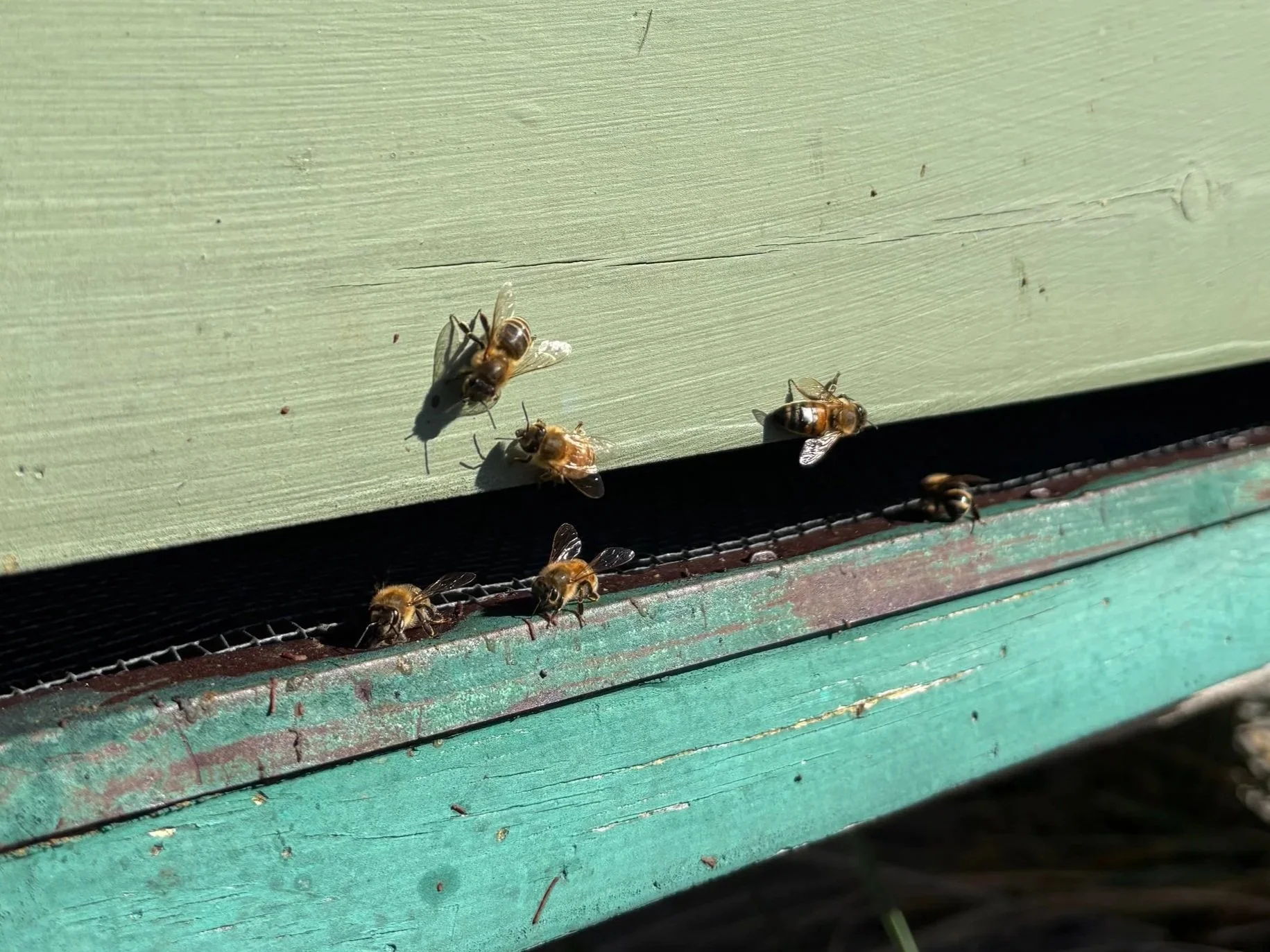
The bees are waking up! Our very special Katie Bee Honey Co hives are buzzing with spring activity. In today’s blog post, we’re sharing a little crash course in honeybee magic so you can join us in the wonder of seeing these tiny magicians at work again. 🐝
Bee colonies traverse the seasons in ways that are just as incredible and mysterious as pretty much everything magical that else bees do. To begin with, the bees aren’t really “waking up,” because they never went to sleep! Colonies remain awake, abuzz, and ideally alive through the winter, behind closed doors and out of sight. As temperatures drop in late fall, honey bees form a big round cluster of warm vibrating bodies inside the hive, with the queen at the center. Saved-up honey is consumed as winter provisions to carry them through to spring.
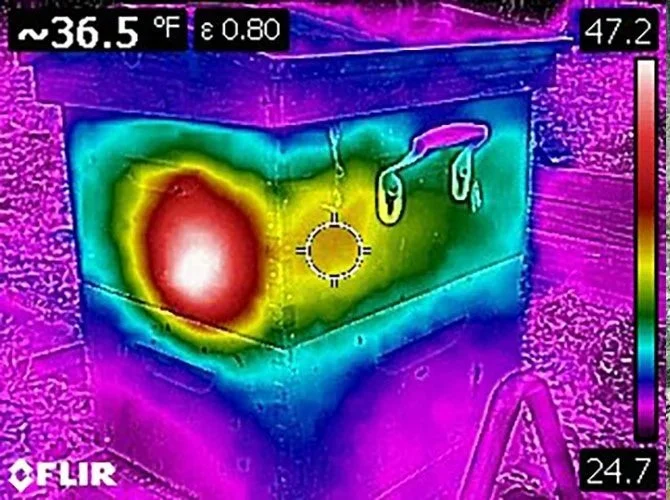
The bee-blob contracts when temperatures dip, and will loosen and spread out when temperatures rise. In a very egalitarian fashion, bees frequently change layers, moving in and out of the blob, taking shifts on who’s on the cold outer layer, who’s tucked into that warm center, who’s vibrating at maximum heat-generating capacity, and who’s resting. All this shared effort means that the outer layer of the cluster rarely dips below bee-lethal temps, and the cozy center of the cluster keeps the queen at an astonishing 90-95F! Check out this wild thermal image of a bee hive in the winter:
The bees we have on our two properties are tended by the folks at Katie Bee Honey Co, who know a whole lot more about honey, bees, and honeybees, than we do! But having the bees around has been such an educational experience that’s inspired lots of questions and answers, and we thought we would share with you dear reader, in the season’s wonder. We’re looking forward to another year of these bees helping us out on the farm as they gather up all the pollen their hearts desire. Thanks to their work, we happily see increased harvests in everything that comes from a flower: sugar snap peas, cucumbers, tomatoes, zucchinis, etc etc, and our whole FRUIT ORCHARD as it steps into another year of maturity (more on the orchard next week!). Hopefully you learned somethin’ new reading along with us today. And next time you see a bee, tell them you’re proud!
Bzzzzzzzzz,
Diamond Hill Farmers
Bee Excited :-)