
SP26 (WK10): Sunscreen for plants!
Dear Farm Community -
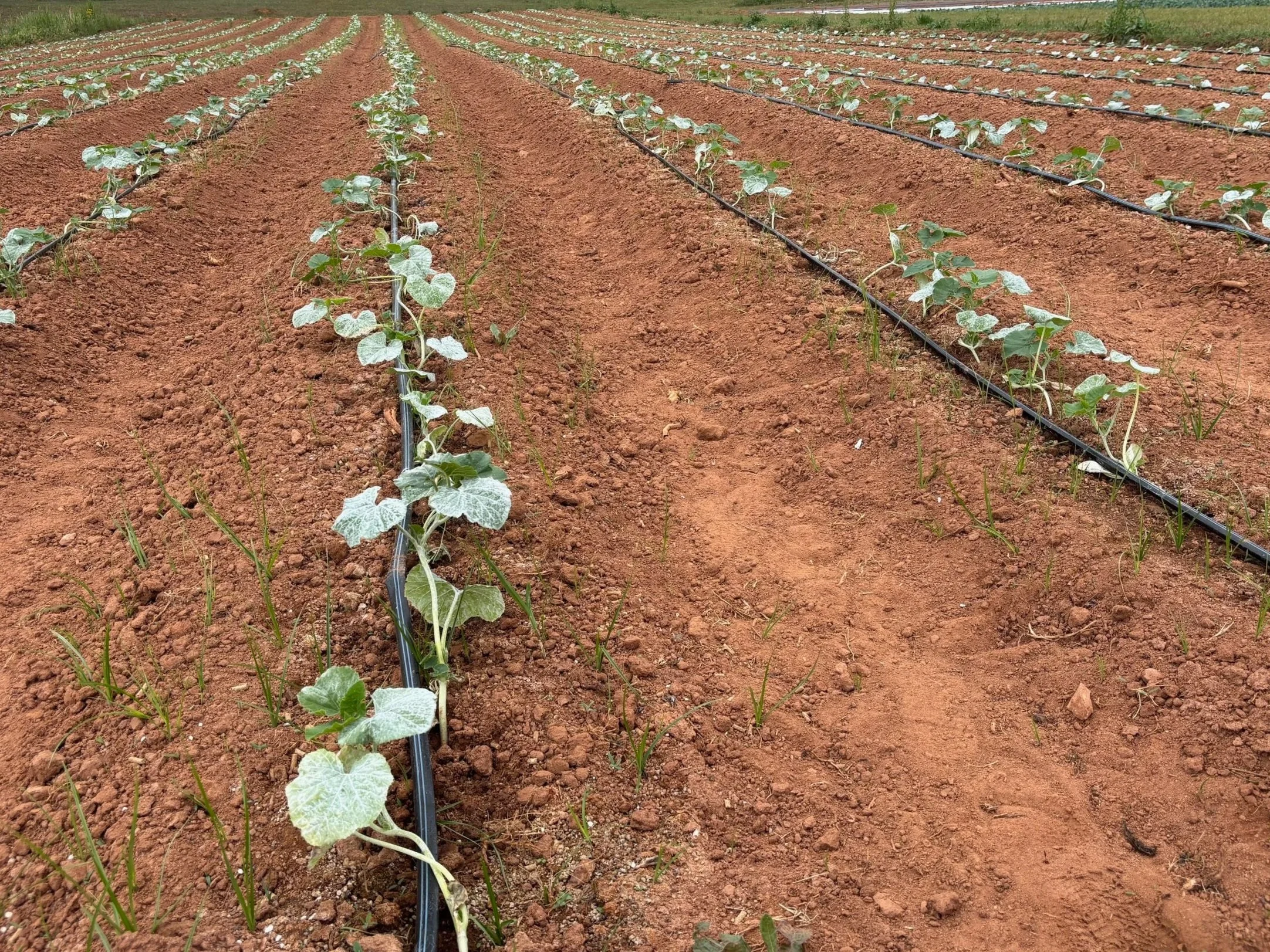
Time is just flying by, and somehow we’re in May already. It happens every year and yet we’re still surprised. This week we got the first wee bit of a harvest off of our early summer squash and cucumber plantings ~ only a few pounds each but what a wakeup call that summer is almost here!!
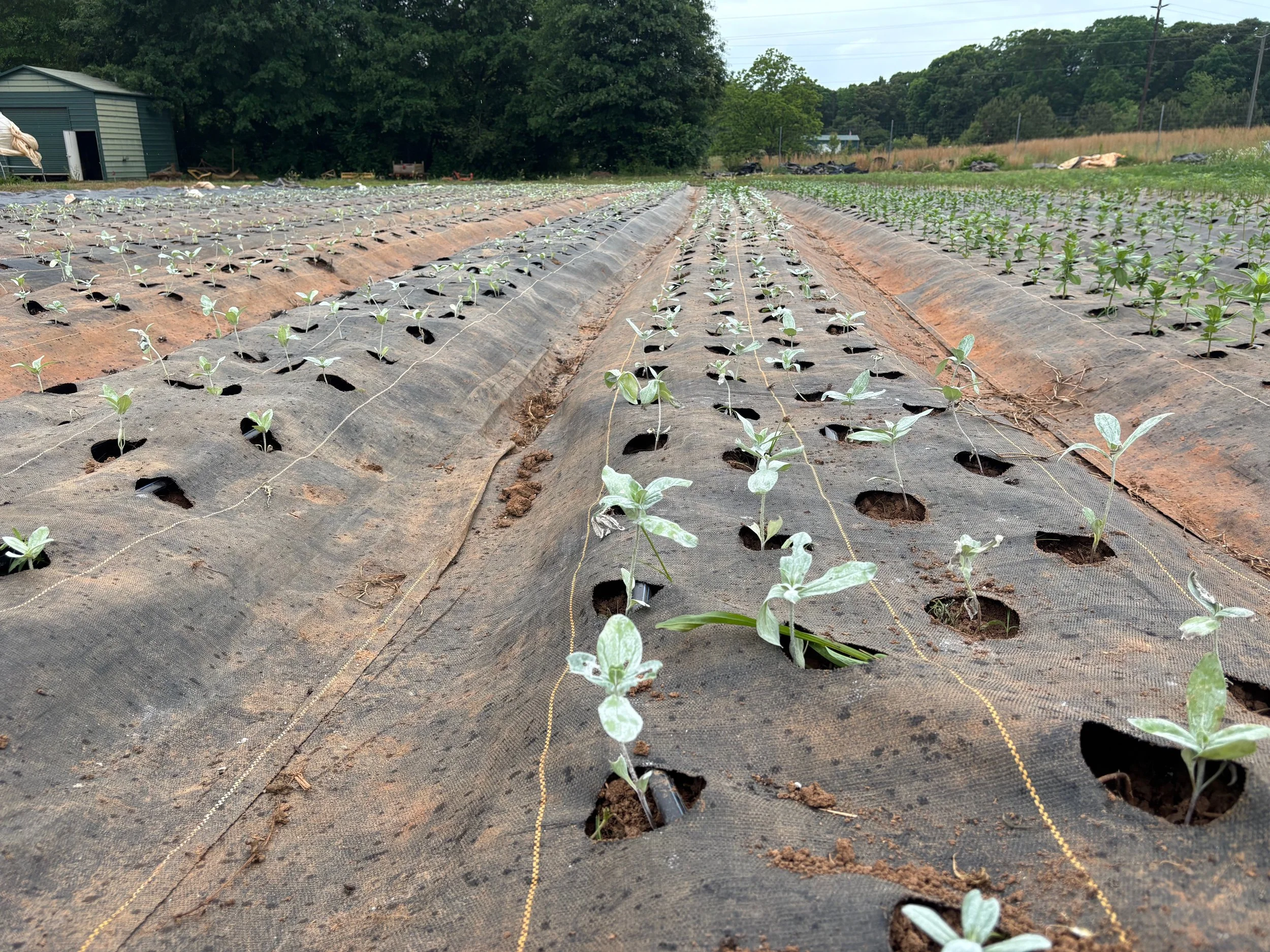
We’re feeling grateful for last week’s rain, with even more on the horizon. The transplanting hustle continues for us, and we recently got our first round of zinnias in the ground along with more squash and cucumbers! These crops, particularly prone to pest damage, get a little extra love when they make the leap to the field. So this week we’re sharing some Farmin’ 101 and talking about an organic farming trick that helps them settle in and make it all the way to harvest… Kaolin clay.
Kaolin clay is a simple, naturally occurring mineral we use to protect tender young plants during these intense spring transitions. It forms a physical barrier that deters cucumber beetles, squash bugs, and other pests that can be especially hard on young crops, while also serving as a sunscreen to prevent sunscald and reduce heat stress. That sun protection is especially important as seedlings transition from the shelter of the greenhouse into the full, unfiltered light of the field. Without it, leaves can become scorched and crispy, leading to weaker growth, or in some cases the loss of the plant altogether. Right now, pest protection is the primary benefit, but as the season heats up and the sun gets soooo much more intense, it becomes increasingly valuable for managing sun exposure and helping seedlings avoid overheating and sunburn before they’re fully established.
And while it might seem like the clay would block photosynthesis, overall it actually supports the plant’s ability to function well. When plants get too hot, they close their stomata to conserve water, which slows photosynthesis to a crawl (part of why growth can stall in the peak of summer). By keeping leaf temperatures lower, the clay helps plants continue photosynthesizing more efficiently. The result is stronger, more resilient growth right from the start.
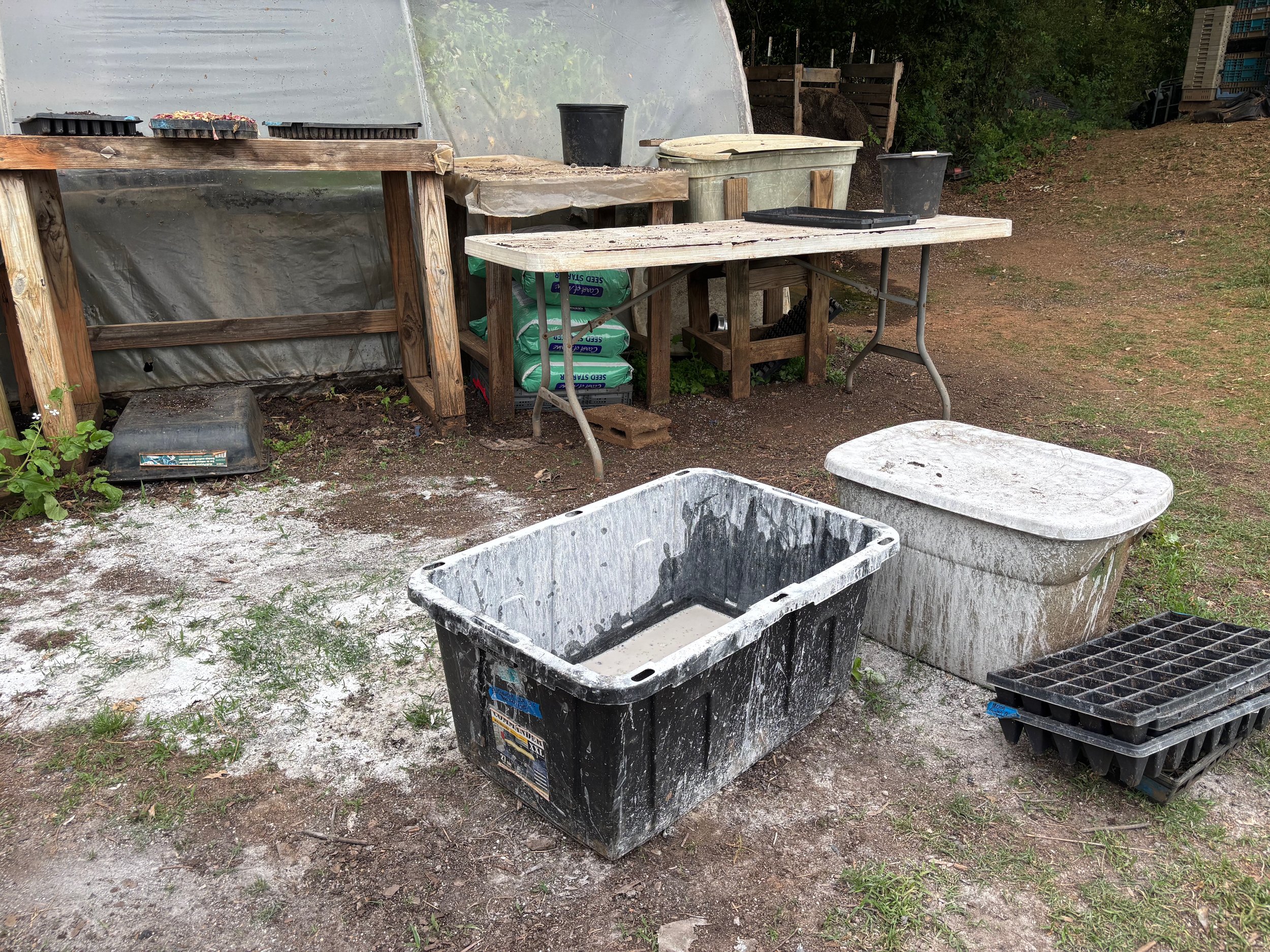
To apply the clay, we mix it into a slurry and dip each seedling just before transplanting, leaving behind a soft white coating on the leaves. It might look a little unusual, but it’s a gentle, non-toxic way to give these crops a better shot at thriving as they get established and adjust to life in the field.
This week in your CSA’s we’re so excited to be sharing our delicious sugar snap peas with you! Sweet as can be, they’re one of those veggies that really don’t need much to be enjoyed.
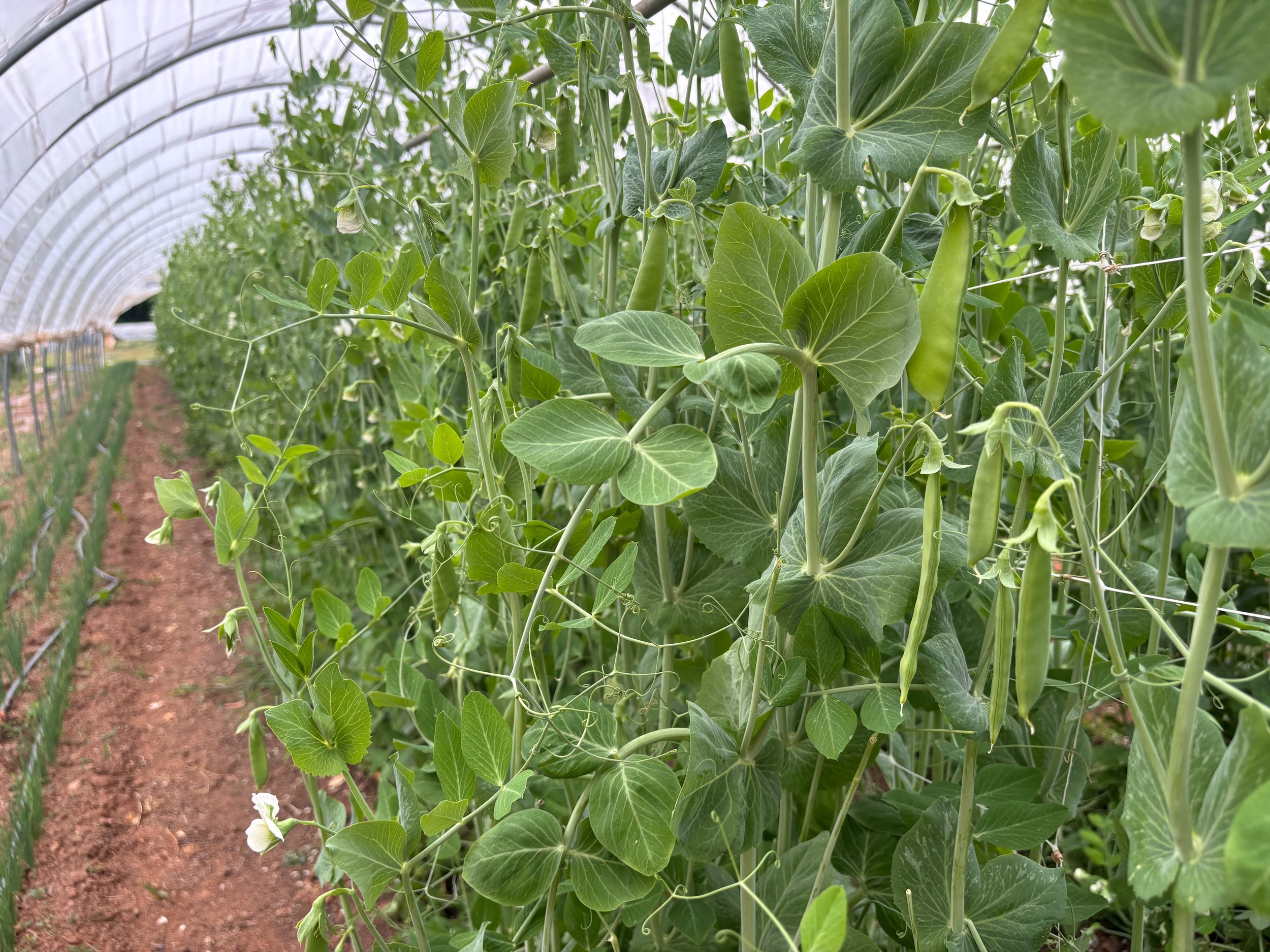
You can keep it simple by snacking on them raw, or let them shine in some of your recipes this week. This side dish recipe for Sugar Snap Peas with Lemon-Chili Breadcrumbs lets the snap peas take the lead, and toasted breadcrumbs, lemon zest, and a little chili add texture and pizzaz. If you’re leaning toward fresh, springy, and herby, this Lemony Halloumi With Snap Peas & Pea Sprouts brings with it citrus, cheese, and tender greens for a more substantial spring plate. Or perhaps you’d rather make a light but nutritious Mango Ginger Rice Bowl that keeps it sweet with both snap peas and sliced mango! However you use ‘em, let those snap peas shine
Applying our sunscreen too,
Diamond Hill Farmers
we grew this for you:
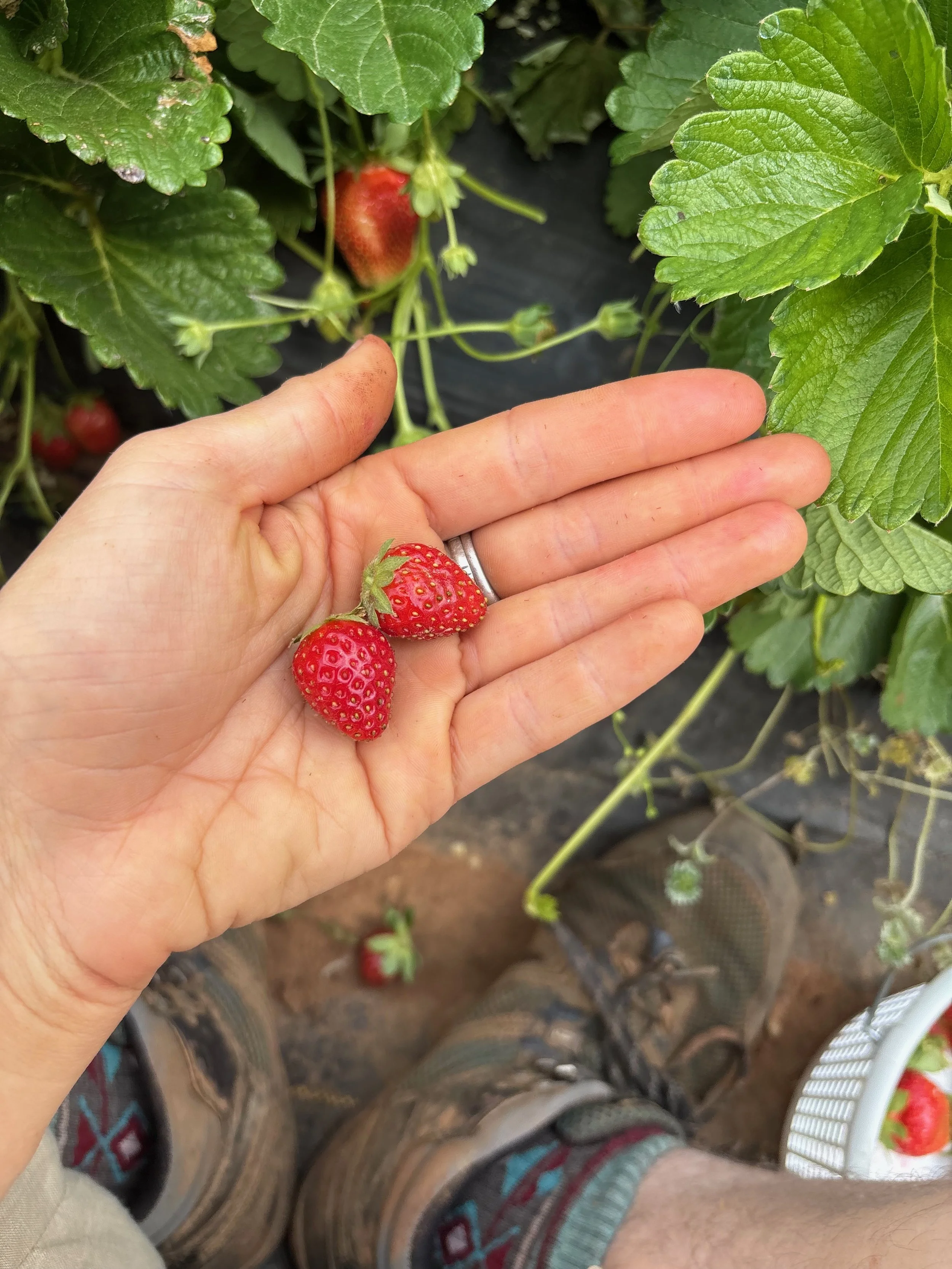
standard share: strawberries, parsley, salad mix, carrots, sugar snaps
large share: strawberries, parsley, salad mix, carrots, sugar snaps, sprouting broccoli, arugula